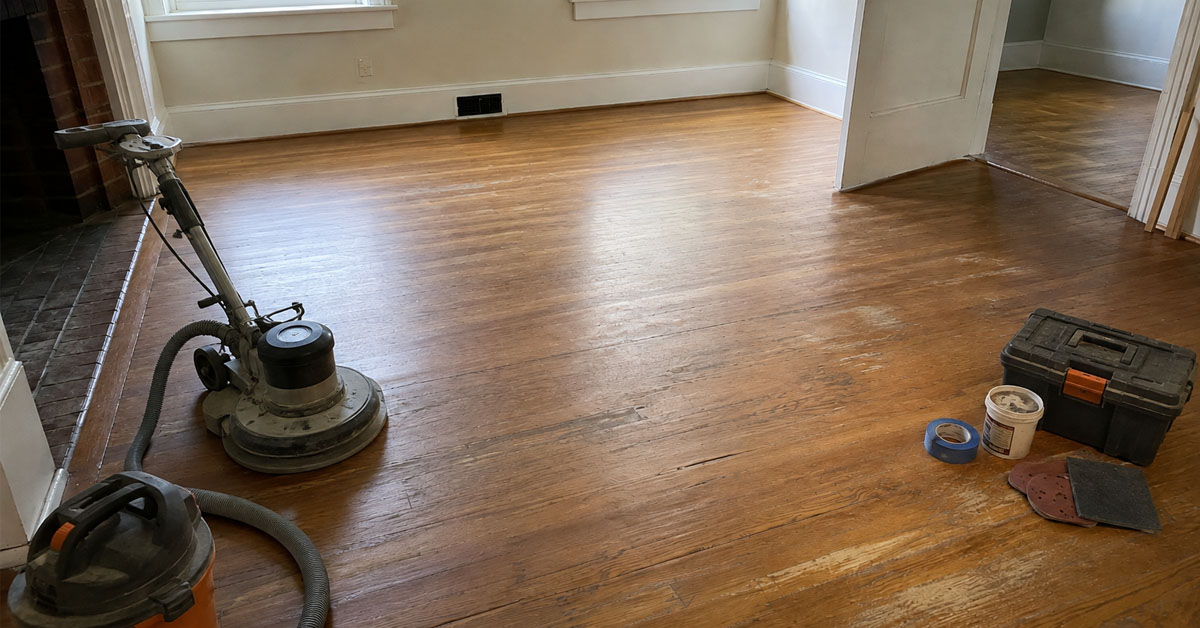
7 Hidden Flooring Issues to Check Before Refinishing an Older Concord Home
Older hardwood floors can be one of the most appealing features in a Concord home. The grain, board variation, and natural character that develop over decades are difficult to reproduce with a brand-new floor. When the surface becomes scratched, faded, or dull, refinishing often seems like the obvious way to bring that character back.
But older floors deserve a closer look before the sanding equipment comes out.
What appears to be ordinary surface wear can sometimes point to moisture underneath the floor, loose boards, deep staining, previous repairs, or hardwood that has already been sanded several times. Refinishing without identifying those conditions first can leave problems behind—or reveal them only after the old finish has been removed.
For homeowners considering hardwood floor refinishing in Concord, NC, the condition beneath the finish matters just as much as the scratches you can see from across the room.
Why Older Hardwood Floors Need More Than a Surface Inspection
A newer hardwood floor usually comes with a fairly clear history. With an older floor, that history may be difficult to reconstruct.
Previous owners may have sanded it, stained it, replaced individual boards, covered sections with carpet, repaired plumbing leaks, moved walls, or added onto the house. Different rooms may even have been finished at different times.
That does not mean an older floor cannot be beautifully restored. Many can. It simply means the right refinishing plan starts by determining what the existing wood can safely handle.
Before moving forward, look for these seven flooring problems.
1. Moisture Damage That Has Not Been Corrected
Water is one of the most important problems to identify before refinishing hardwood.
A dark stain near a window or old plumbing fixture may be evidence of a past incident that has already been corrected. Ongoing moisture is different. Sanding and applying a new finish will not solve a leak, damp crawl space, plumbing problem, or moisture imbalance affecting the wood.
Possible warning signs include:
- Boards that are cupping or changing shape
- Dark discoloration that continues between boards
- Soft or deteriorated wood
- Finish that repeatedly peels or fails in one location
- A musty odor near the affected flooring
- Changes concentrated around exterior doors, appliances, bathrooms, or plumbing
Wood naturally responds to changes in its environment. The National Wood Flooring Association’s guidance on wood floor moisture explains that excessive moisture can contribute to cupping, while dry conditions may lead to gaps or splitting.
If the moisture source is still active, it should be identified and corrected before cosmetic restoration begins.
Minor surface discoloration may disappear during sanding. Deep water damage may require individual boards to be repaired or replaced first.
2. Loose, Squeaky, or Moving Floorboards
An older floor can look perfectly refinishable while still moving noticeably underfoot.
An occasional squeak does not necessarily indicate a serious problem. Persistent movement, bouncing, loose planks, or sections that shift when walked across deserve closer attention.
The problem may involve the hardwood itself, fasteners, gaps that have developed over time, or movement below the finished flooring. Sanding can improve the surface, but it cannot stabilize a board that is no longer properly secured.
That is why necessary hardwood floor repair should be identified before stain and protective finish coats are applied.
Depending on the condition, repair may involve:
- Securing loose boards
- Replacing damaged planks
- Addressing exposed or loose fasteners
- Correcting isolated movement
- Evaluating the supporting surface below the hardwood
Completing these repairs first also helps prevent newly finished areas from being disturbed afterward.
3. Deep Stains That Sanding May Not Completely Remove
One of the biggest misconceptions about refinishing is that sanding automatically removes every stain.
It does not.
Sanding removes the finish and a controlled amount of wood from the surface. If discoloration has penetrated deeply into the board, some of it may remain after the surrounding floor reaches the appropriate sanding depth.
Older floors may contain stains from:
- Previous plumbing leaks
- Pet accidents
- Wet planters
- Spills that remained unnoticed
- Rust from metal furniture or fixtures
- Long-term moisture exposure
The depth of a stain matters more than how dramatic it looks before sanding. Some dark-looking surface marks disappear surprisingly well, while a smaller stain that has penetrated deeply can be much harder to remove.
Aggressively sanding the entire floor just to eliminate one deep mark is not always the right solution because unnecessary sanding removes usable wood from every board.
A flooring professional may instead recommend replacing a severely stained plank and blending the repair into the surrounding floor.
4. Hardwood That Has Already Been Sanded Several Times
This is particularly important in an older Concord home when nobody knows the floor’s refinishing history.
Solid hardwood can generally withstand multiple refinishing projects because it contains considerably more real wood above its tongue-and-groove connection than a thin surface veneer. But every complete sanding removes some material.
Eventually, a floor can become too thin to sand safely again.
Signs of previous aggressive sanding may include:
- Nail heads or fasteners becoming visible
- Tongues beginning to show along board edges
- Boards that appear unusually thin near transitions
- Uneven flooring where previous sanding removed excessive material
- Cracking near edges of older planks
The number of times a floor has been refinished is less important than how much usable wood actually remains.
This is one reason professional hardwood floor sanding and refinishing should begin with an inspection rather than an assumption.
When sufficient wood remains, another refinishing may be appropriate. When it does not, alternative restoration methods or replacement may need to be considered.
5. Large Gaps, Splits, Cupping, or Uneven Boards
Not every gap in hardwood flooring is a defect.
Wood expands and contracts as indoor conditions change, so small seasonal gaps may appear and disappear. Older floors can also develop modest variations that are simply part of their character.
The concern is movement that appears excessive, permanent, or concentrated in one area.
Look closely for:
- Large gaps that remain throughout the year
- Split boards
- Raised board edges
- Noticeable cupping
- Crowning or uneven board profiles
- Areas that sit substantially higher or lower than surrounding flooring
Sanding an uneven floor without first understanding why it became uneven can remove too much material from raised areas while leaving the underlying cause untouched.
For example, if boards are distorted because of an unresolved moisture condition, the moisture problem needs attention before determining how the hardwood itself should be restored.
The goal should not be to make an older floor artificially perfect. It should be to distinguish normal age and character from conditions that could affect the quality or durability of the refinishing project.
6. Old Repairs, Patches, and Mismatched Wood
Older houses often tell their remodeling history through the floor.
A wall may have been removed between two rooms. A floor register may have moved. A doorway may have been widened. An old cabinet footprint may now be exposed. Damaged boards may have been replaced years earlier with whatever wood was available.
Once the existing stain is sanded away, those differences can become much more noticeable.
A repaired section may differ in:
- Wood species
- Board width
- Grain pattern
- Age
- Natural color
- Milling profile
- Direction of installation
These differences do not automatically mean the entire floor needs replacement.
A skilled repair may be able to integrate appropriate boards, improve an obvious patch, or create a more natural transition before the complete area is sanded and stained.
This is also where stain selection becomes important. Professional hardwood floor staining should account for how both original and replacement boards absorb color. Testing stain directly on the prepared floor provides much more useful information than choosing from a printed sample alone.
7. Sections That May Need Replacement Instead of Refinishing
Sometimes the most important finding during a refinishing inspection is that part of the floor should not be refinished at all.
Refinishing is designed primarily to restore a worn surface. It is not a substitute for replacing hardwood that has lost its structural integrity.
Replacement may be more appropriate for individual boards or sections with:
- Severe deterioration
- Extensive water damage
- Major splitting
- Significant deformation
- Insufficient material remaining for another sanding
- Damage that extends well below the surface
The good news is that finding several damaged boards does not necessarily mean removing the entire hardwood floor.
When surrounding flooring remains stable and serviceable, targeted replacement may preserve much of the original floor. In homes where damage is more extensive, professional hardwood floor installation may provide a better long-term solution for the affected room or continuous area.
The decision should be based on the condition of the wood rather than simply its age.
Hardwood Floor Refinishing in Concord, NC Should Start With Diagnosis
The difference between a good refinishing project and an unnecessary repair later often comes down to what was discovered before sanding began.
A professional assessment should look beyond scratches and finish wear. Depending on the home and floor condition, the contractor may evaluate:
- Remaining hardwood thickness
- Board stability
- Visible moisture-related changes
- Deep staining
- Previous patches
- Damaged or missing boards
- Gaps and movement
- Existing finish condition
- Transitions between rooms
- Whether different flooring materials or species are present
This inspection helps separate cosmetic problems from issues that need repair.
For example, widespread scratches over structurally sound hardwood are usually a refinishing concern. A moving board is a repair concern. Active moisture is a condition that should be resolved before either of those services is completed.
Treating each problem correctly can preserve more of the existing floor.
Refinish, Repair, Recoat, or Replace?
Not every worn older floor needs the same treatment.
Refinishing
Full refinishing is typically considered when the existing finish is substantially worn, scratches are widespread, bare wood is visible, the stain needs to change, or sanding is necessary to restore the surface.
Repair and Refinishing
When most of the floor remains sound but individual planks are damaged, targeted repairs can often be completed before the complete area is refinished.
Buffing and Recoating
If the existing stain and wood remain in good condition and the primary issue is wear in the protective finish, buffing and recoating hardwood floors may be worth evaluating.
Recoating does not remove deep scratches, change the stain color, or correct damage in the wood itself. It is a maintenance option rather than a substitute for full refinishing.
Replacement
Replacement becomes more practical when the flooring has extensive structural damage, cannot safely withstand additional sanding, or requires repairs so widespread that preserving the existing boards no longer makes sense.
An older floor should not be replaced simply because it looks old. Likewise, it should not be refinished merely because sanding seems easier than investigating the underlying problem.
What Should Be Decided Before Sanding Starts?
Once the floor has been inspected and necessary repairs identified, homeowners can begin making the design and scheduling decisions that come with refinishing.
Before work starts, confirm:
- Which rooms will be refinished
- Which damaged boards will be repaired or replaced
- Whether connected rooms should be completed together
- Whether the existing color will remain or change
- Which stain samples will be tested
- Which finish sheen will be applied
- How furniture and appliances will be handled
- When foot traffic can resume
- When rugs and furniture can safely return
Older homes can also contain transitions between original hardwood and flooring installed during later renovations. Planning these details beforehand generally produces a more intentional finished appearance.
Can the Character of an Older Floor Be Preserved?
Yes—and in many homes, preserving that character is part of the reason to refinish rather than replace.
Not every small gap, color variation, grain difference, or historical repair needs to disappear.
A refinished older floor can still look like an older floor. The goal is usually to remove distracting wear, repair meaningful damage, restore protection, and create a more consistent appearance without erasing every sign of age.
That distinction matters.
Trying to sand away every imperfection can remove more wood than necessary. A careful restoration approach considers which characteristics are cosmetic, which contribute to the floor’s personality, and which indicate an actual performance problem.
Questions to Ask Before Refinishing an Older Hardwood Floor
Before committing to a project, ask the flooring contractor what they see—not simply what finish they recommend.
Useful questions include:
- Is there enough wood remaining to sand safely?
- Do any boards need replacement before refinishing?
- Are the gaps normal or evidence of another issue?
- Does any discoloration appear too deep to sand out?
- Are there signs of moisture that should be investigated?
- Have previous repairs used a different wood species?
- Can repaired areas be blended with the original floor?
- Would recoating be sufficient instead of full refinishing?
- Which imperfections are likely to remain afterward?
Clear expectations are especially important with older flooring because restoration has different limitations from installing a completely new surface.
FAQs About Refinishing Older Hardwood Floors in Concord
Can Very Old Hardwood Floors Still Be Refinished?
Often, yes. Age alone does not determine whether hardwood can be refinished. The condition of the boards, remaining thickness, structural stability, moisture exposure, and previous sanding history are more important.
How Do I Know If My Hardwood Has Been Sanded Too Many Times?
Visible tongue-and-groove edges, exposed fasteners, cracking near board edges, or unusually thin sections can be warning signs. A professional can inspect the flooring before determining whether another full sanding is appropriate.
Should Damaged Boards Be Repaired Before Refinishing?
In most cases, repairs that affect the floor itself should be completed at the appropriate stage before the final stain and finish are applied. This allows repaired boards to be integrated with the surrounding flooring as consistently as possible.
Will Refinishing Fix Gaps Between Old Floorboards?
Not necessarily. Small seasonal gaps may be normal, while larger persistent gaps can have different causes. Filling every gap without understanding normal wood movement may not provide a lasting solution.
Can Dark Water or Pet Stains Be Sanded Out?
Some can, but deep discoloration may penetrate farther into the wood than sanding can safely remove. In those cases, replacing individual affected boards may produce a better result than aggressively sanding the entire floor.
Is Recoating Better Than Refinishing an Older Floor?
It depends on the condition. Recoating can be appropriate when the protective finish is worn but the stain and exposed wood remain in good shape. Deep scratches, bare areas, significant discoloration, or a desired color change generally require a different approach.
Can New Boards Be Matched to Old Hardwood?
A close match may be possible, but age, species, milling, grain, existing oxidation, and stain absorption can all affect the final appearance. Selecting suitable replacement material and testing the finish are important when blending old and new wood.
Inspect First, Then Bring Your Concord Hardwood Floors Back to Life
Older hardwood does not need to be flawless to be worth saving. Small variations, aged grain, and evidence of decades of use can be part of what gives a Concord home its character.
The important question is what lies beneath the worn finish.
Before beginning hardwood floor refinishing in Concord, NC, check for moisture problems, unstable boards, deep stains, excessive previous sanding, abnormal gaps, mismatched repairs, and sections that may need replacement. Identifying those conditions first allows the refinishing process to address the actual floor rather than simply improving its surface.
Majestic Hardwood Floors helps homeowners evaluate existing hardwood, complete necessary repairs, sand and refinish worn surfaces, select new stain colors, and determine when replacement makes more sense.
A careful inspection before sanding can preserve more of the original wood, prevent avoidable surprises, and give an older hardwood floor the restoration approach it actually needs.