How Hardwood Floor Refinishing Revives Concord, NC Homes
Hardwood floors rarely lose their beauty overnight. Scratches gradually appear in busy areas, the finish becomes dull, and sunlight creates uneven coloring across the room. Over time, floors that once added warmth and character can make the entire home feel worn.
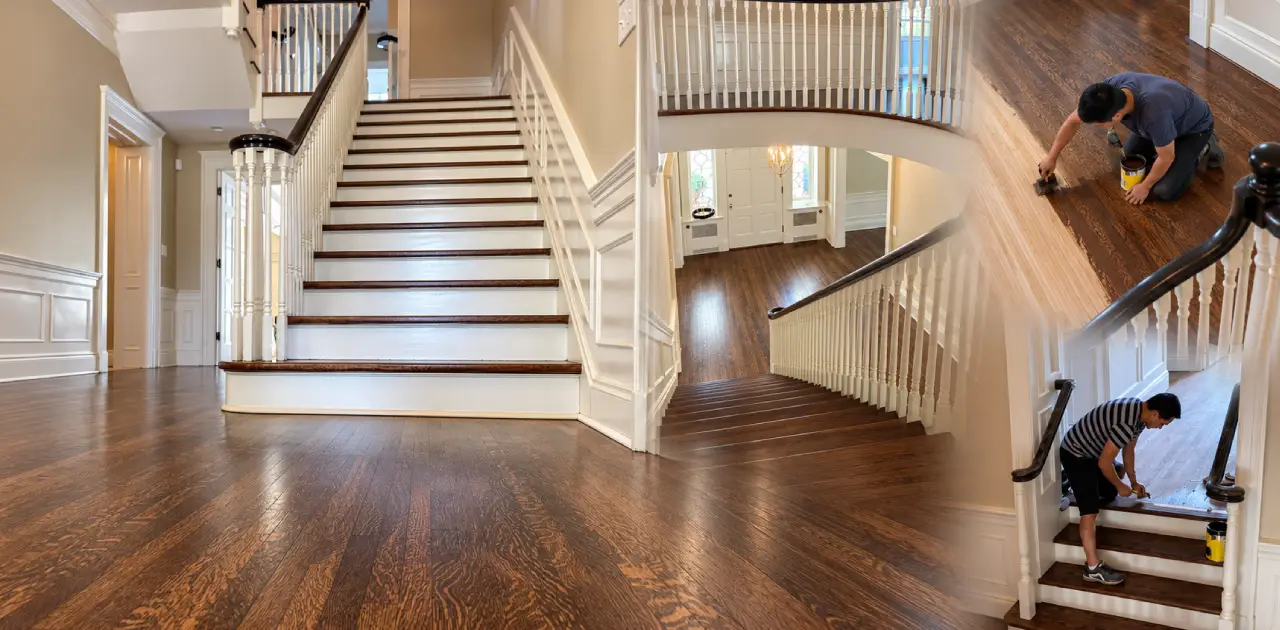
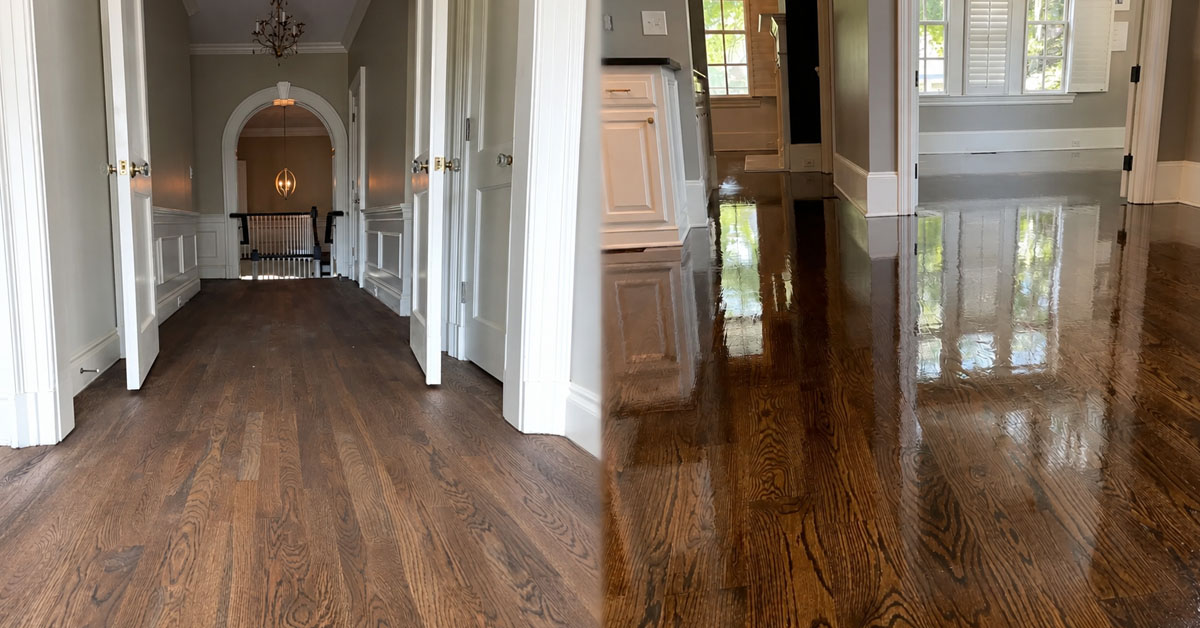
Professional hardwood floor refinishing can restore much of that lost beauty without replacing structurally sound flooring. The process removes the worn surface, corrects many visible imperfections, refreshes the color when needed, and adds a new protective finish.
For homeowners considering hardwood floor refinishing in Concord, NC, it can be one of the most effective ways to update an interior while preserving the natural wood already inside the home.
What Hardwood Floor Refinishing Does
Hardwood floor refinishing restores the exposed surface of an existing wood floor. The process typically involves sanding away the old coating and a thin layer of wood before applying stain and protective finish coats.
Refinishing can often improve:
- Surface scratches and scuff marks
- Dull, cloudy, or uneven finishes
- Sun-faded sections
- Worn traffic patterns
- Minor discoloration
- Outdated stain colors
The new finish does more than improve appearance. It also helps protect the wood from everyday foot traffic, dirt, spills, and normal household use.
Signs Your Hardwood Floors May Need Refinishing
One small scratch does not mean the entire floor needs restoration. Refinishing becomes more appropriate when the damage is widespread or the protective finish is beginning to fail.
The Floor Remains Dull After Cleaning
If proper cleaning no longer restores the floor’s appearance, the finish may be too worn to reflect light evenly.
Scratches Cover Several Areas
Widespread scratches around entrances, hallways, kitchens, and living rooms often indicate that the protective coating is breaking down.
Bare or Gray Wood Is Visible
Gray-looking sections may mean the finish has worn away and exposed wood is beginning to absorb moisture and dirt. Addressing the problem early may prevent deeper damage.
The Color Looks Uneven or Outdated
Sunlight, rugs, furniture, and normal aging can create noticeable differences in color. Refinishing can improve consistency and gives homeowners the option to select a stain that better complements their current interior.
How Professional Hardwood Floor Refinishing Works
A successful refinishing project requires careful preparation, controlled sanding, appropriate repairs, and properly applied finishing products.
1. Floor Inspection
A flooring professional first evaluates the wood’s thickness, board condition, previous sanding history, stains, gaps, movement, and finish failure.
Solid hardwood can often be refinished more than once, but the floor must have enough usable wood remaining. Some engineered hardwood can also be refinished when its real-wood wear layer is sufficiently thick.
2. Room Preparation
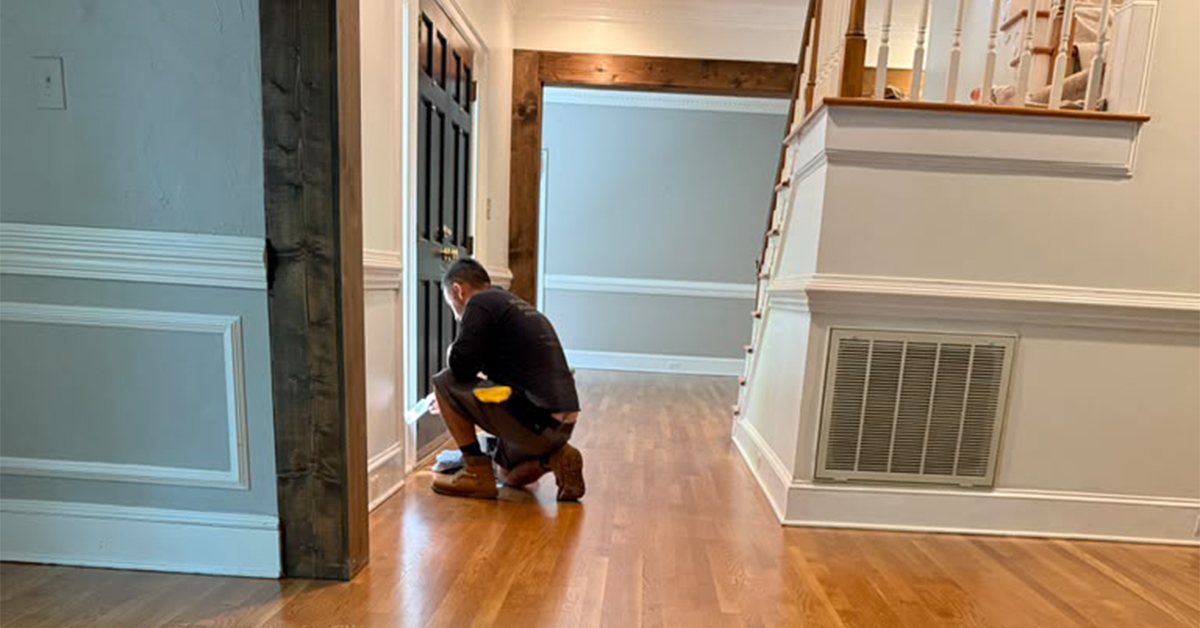
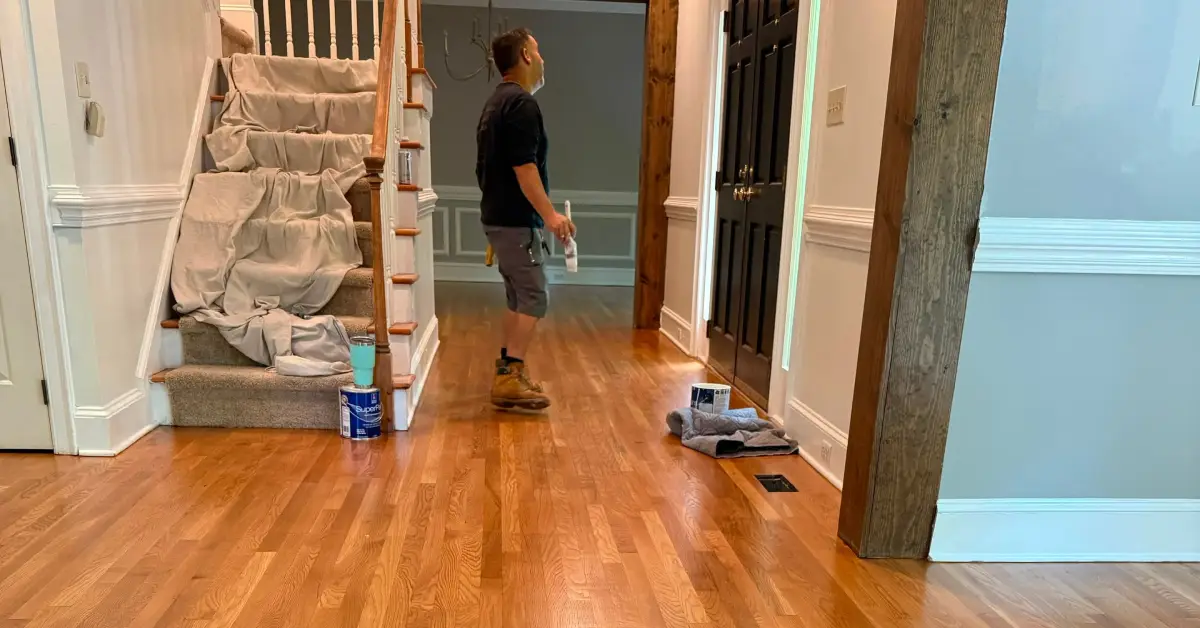
Furniture, rugs, and movable items are removed. Doorways, cabinets, vents, and nearby surfaces may also need protection before work begins.
3. Sanding the Existing Surface
Professional sanding removes the old finish, shallow scratches, minor discoloration, and surface imperfections. Multiple sanding passes are usually completed with progressively finer abrasives.
The goal is to create a smooth, even surface without dips, visible sanding lines, or differences between the center and edges of the room. Professional hardwood floor refinishing and sanding also requires specialized equipment for corners and perimeter areas.
4. Repairing Damaged Boards
Loose, cracked, or severely damaged planks should be addressed before stain and finish are applied. Necessary work may include securing boards, replacing damaged sections, correcting exposed fasteners, or blending replacement wood with the surrounding floor.
Floors with deeper damage may require hardwood floor repair and restoration before refinishing can continue.
5. Applying Stain and Finish
Homeowners may keep a similar color, return to a more natural appearance, or choose a different stain. Testing samples directly on the prepared wood is important because each species absorbs stain differently.
After staining, protective finish coats are applied. Matte and satin finishes are popular in active homes because they provide a refined appearance without highlighting every small scratch or dust particle.
Can You Change the Floor Color During Refinishing?
In many cases, the stain color can be changed once the previous finish and stain have been sanded away.
The best color should complement the home’s permanent features, including cabinetry, trim, walls, stairs, and adjoining floors. Lighting also matters because the same stain may appear different in bright natural light and darker interior spaces.
Professional hardwood floor staining allows homeowners to compare samples and select a color that works naturally with the room instead of relying only on a printed stain chart.
Refinishing or Replacing: Which Does Your Floor Need?
Worn flooring does not automatically need to be removed. Refinishing is often the better choice when the boards remain structurally sound and most of the damage is limited to the surface.
Refinishing may be appropriate when:
- The finish is worn but the boards remain stable
- Most scratches are surface-level
- Only limited repairs are needed
- The homeowner wants to change the stain
- The wood is thick enough to sand safely
Replacement may be necessary when large areas have deep water damage, severe warping, extensive deterioration, major subfloor problems, or insufficient wood remaining after previous sanding projects.
A professional inspection can help homeowners avoid replacing floors that could still be restored.
Refinishing and Recoating Are Different Services
Buffing and recoating lightly abrades the existing finish so a new protective coat can bond to it. It may be suitable when the floor is dull or lightly scratched but the stain and exposed wood remain in good condition.
Full refinishing is more extensive. It removes the existing finish down to bare wood and is generally recommended when:
- Bare wood is visible
- Scratches are widespread
- The color is uneven
- The finish has worn through
- A new stain color is desired
The National Wood Flooring Association’s refinishing guidance also explains the difference between renewing the existing finish and completing a full sanding and refinishing project.
Common Refinishing Mistakes to Avoid
Uneven Sanding
Holding sanding equipment in one place too long can create dips, waves, swirl marks, or permanent surface damage.
Skipping Stain Samples
A stain may look very different across an entire floor than it does on a small sample card. Testing it directly on the prepared wood helps prevent an unwanted color result.
Ignoring Existing Damage
Loose boards, deep stains, exposed nails, and damaged planks should be corrected at the appropriate stage. A new finish improves appearance but does not fix structural problems underneath it.
Rushing the Drying Process
A surface may feel dry before it is ready for furniture, rugs, pets, or normal foot traffic. Following the contractor’s curing instructions helps prevent marks and finish damage.
Using the Wrong Cleaning Products
Steam cleaners, excessive water, wax, oil soaps, and harsh chemicals may damage certain finishes. Floor care should always match the finishing system applied.
How to Prepare Your Concord Home
Before refinishing begins, homeowners should remove furniture, rugs, fragile decorations, and other movable items from the work area. It is also important to plan for pets, room access, ventilation, and the temporary loss of essential spaces such as kitchens or hallways.
Discuss the following details with the flooring contractor:
- Which rooms and stair areas are included
- Whether damaged boards need repair
- Who will move appliances or heavy furniture
- Which stain and sheen will be used
- When normal foot traffic can resume
- When rugs and furniture can be returned
The schedule will depend on the floor’s condition, square footage, repairs, stain selection, finish system, humidity, and required drying time.
Protecting Newly Refinished Hardwood Floors
Proper care can help the restored finish remain attractive for longer.
- Sweep or vacuum regularly to remove abrasive dirt
- Clean spills promptly without soaking the wood
- Place felt pads beneath furniture legs
- Lift furniture instead of dragging it
- Use breathable rug pads approved for hardwood
- Follow product-specific cleaning instructions
- Maintain reasonably stable indoor humidity
Avoid placing rugs or heavy furniture on the floor until the finish has cured for the period recommended by the contractor.
Hardwood Floor Refinishing FAQs
Can Every Hardwood Floor Be Refinished?
No. The floor must have enough usable wood remaining for sanding. Solid hardwood can often be refinished, while engineered hardwood depends on the thickness of its real-wood surface layer. Laminate cannot be refinished like real wood.
Will Refinishing Remove Every Stain?
Not always. Surface stains may sand out, but deep water damage, pet stains, or discoloration that has penetrated the wood may remain visible or require board replacement.
Do I Have to Change the Stain Color?
No. Homeowners can retain a similar shade, select a different color, or use a natural finish that highlights the wood grain.
What Finish Is Best for a Busy Household?
Satin and matte sheens are commonly selected because they provide a polished appearance while making dust and minor scratches less noticeable than high-gloss finishes.
Can Only One Damaged Section Be Refinished?
Localized repairs may be possible, but matching an older stain and finish can be difficult. Refinishing a complete continuous area often produces a more uniform result.
How Often Should Hardwood Be Refinished?
There is no fixed schedule. The need depends on household traffic, pets, maintenance, moisture exposure, finish quality, wood thickness, and the floor’s actual condition.
Bring Back the Natural Character of Your Concord Home
Scratches, faded color, and worn traffic paths do not always mean hardwood flooring has reached the end of its useful life. When the boards remain structurally sound, professional refinishing can reveal the natural grain, refresh the color, and restore surface protection.
Majestic Hardwood Floors helps Concord, NC, homeowners evaluate, repair, sand, stain, and refinish hardwood floors based on the condition of the wood and the design of the home.
Schedule a professional flooring evaluation to determine whether your hardwood needs a maintenance recoat, targeted repair, complete refinishing, or replacement. The right treatment can transform worn flooring into one of the most remarkable features in your home.